
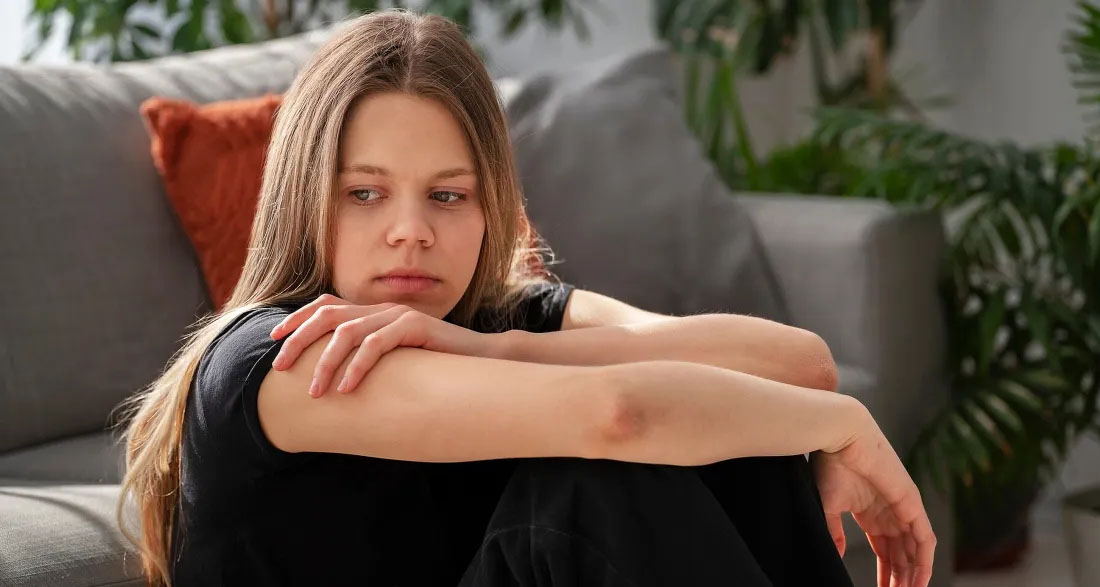
When my mom, Amelia, died, it was like the sun disappeared from our house. Everything went dark. I was only 10. One minute she was giving me a warm hug before school, and the next… she was gone. A car accident. Just like that. So fast. So unfair. There was this big empty hole in my heart that no one could fill.
At school, the grief counselor, Miss Thompson, told me I had to talk about my mom.
“You need to speak about your mom, Mia,” she said softly but seriously. “Feel her presence. Accept the loss, but also accept that she was real, and she mattered. That’s how healing begins.”
It sounded easy. But it wasn’t.
My friends didn’t get it. They looked at me like I was made of glass. Sometimes they handed me fries or ice cream, but never talked about her. Not once.
I felt angry at them. How could they act like everything was normal? Didn’t they see I was falling apart?
“It’s not that, Mia,” Miss Thompson explained after I snapped at my best friend. “They haven’t lost a parent. They don’t understand. Food is how some people try to show love. Accept it. In time, tell them what you really need—just someone to sit next to you and listen.”
I nodded. But inside, I still felt completely alone.
And then my dad—Jeff—changed. He wasn’t the same anymore. After the funeral, he just… disappeared inside himself. No more hugs. No more asking about school. No more anything. Just silence. For a whole year.
The house didn’t smell like her anymore—no vanilla candles, no fresh bread, no books lying open on the couch. It was like she’d been erased.
Then Judy came.
At first, she was just this woman with a bright smile and perfect lemon bars. The first time she visited, I was 11.
“I thought these might cheer you up,” she said, adjusting her shiny earrings.
I didn’t eat them. Not because I was trying to be mean. They were just too perfect. Like they belonged in a magazine ad. Not my real, messy, broken world.
Six months later, Judy moved in—with her fancy candles and her label-maker. A year later, she married my dad in our backyard. There were fairy lights, soft music, and I had to wear a stiff lilac dress she picked out for me. I fake-smiled through the whole thing. I didn’t cry. Not because I wasn’t sad—but because I wouldn’t give them the satisfaction.
Judy tried to be nice, I’ll admit that. But everything she said felt like it came from a guidebook on “How to Be a Stepmom.”
“It’s okay to miss her,” she said once, way too cheerfully, “but maybe we can make new memories together!”
I wanted to scream.
Then one day, when I was 12, I said something about “my mom,” and Judy gently corrected me.
“You mean your late mother,” she said with a soft smile that didn’t reach her eyes. Not cruel. Just cold. A quiet warning.
By 13, my mom’s books were packed up and shoved in the attic—her Austen novels, her messy cookbooks with flour on the pages. I asked to bring them down one day.
“I want to make the stuff she used to cook,” I said. “I want the house to smell like it used to. Like her.”
Judy didn’t even look up from her laptop.
“They’re just collecting dust, doll,” she replied with a smirk. “We’re trying to keep the space clean and aesthetic.”
That night, I went up to the attic and ran my fingers along the taped boxes.
“I’m sorry,” I whispered to them. To her.
At 14, the photo of my mom on my nightstand was gone—replaced by some cheesy framed quote about “fresh starts.” A gift from Judy.
“Maybe it’s time to let go,” she’d say whenever I wore Mom’s necklace.
It was a tiny gold chain with a sapphire heart—Mom’s last gift to me before the accident. I still remember her voice in the hospital, soft but clear.
“This is for you, my heart. For your heart. Even when mine stops, you’ll still have it.”
I never took it off. Even when it didn’t match my outfit. Even when it left little red marks on my neck. It wasn’t just jewelry. It was her.
Judy never said much about it at first. But sometimes, I’d catch her staring at it like it made her uncomfortable.
“Grief is like wearing a winter coat in the summer,” she told me once over breakfast. “Don’t you want to feel light again?”
I just stared at my cereal. No. You don’t take off something that’s sewn into your skin.
She even offered to buy me a different necklace. A tiny gold moon pendant.
“It’s minimalist,” she said proudly, like that would make me forget.
I shook my head. Quietly. She didn’t push—but I saw her flinch every time I kissed my necklace before walking out the door.
Then came the dinner. The one that changed everything.
It was supposed to be just a “simple family meal.” Fancy food, fake conversation. Judy’s parents were there. I sat at the end of the table, fingers tracing my necklace.
Judy’s mom smiled at me. “That’s a lovely necklace, dear. Is it new? It suits you!”
For the first time in forever, I smiled. A real smile.
“It was my mom’s,” I said. “She gave it to me before she passed. I wear it every day.”
Then Judy laughed. A sharp, bitter little laugh.
“Well,” she said, poking at her fish, “technically, I’m your mom now. I’ve done more mothering in the past few years than she did in the ten you had with her.”
Everything went still. Even the waiter froze.
My heart didn’t race. It just… stopped. But my voice? It stayed calm.
“If you think being a mom means erasing the one who came before,” I said, steady and cold, “then yeah. You’ve been amazing, Judy.”
She went pale. Her mom dropped her fork. Dad blinked like he was just now realizing I existed.
“She was my mother,” I said. “You didn’t replace her. You tried to erase her. That’s not the same. Throwing away her things, not letting me cook her recipes, acting like she never existed—really?”
“Watch your tone, Mia,” Dad snapped.
“No,” I said, finally letting my voice rise. “Watch yours. You let this happen. You let her erase my mom. And now you’re rewriting my story to make Judy feel better.”
I stood up, tossed my napkin on the table, and walked out.
I didn’t expect to be gone long. But then my phone buzzed.
Dad: “Don’t come back until you’ve apologized to Judy. You were out of line.”
No “Are you okay?” No “Let’s talk.” Just a command.
I stared at the screen. I didn’t cry. It didn’t even hurt. It just confirmed what I already knew: I was a ghost in that house.
I walked to Aunt Macey’s house—Mom’s sister. She opened the door before I even knocked.
“Say the word, baby,” she said gently. “What happened?”
I told her everything. She made me tea. Muffins. Let me cry into my sleeves.
“You’ll stay here,” she said firmly. “I’m making up your room. This time for real. You’re moving in officially. Not just for a few nights.”
That night, I didn’t sleep much. I curled up on her couch under a lemony blanket and wrote a letter.
Not to Judy. To Dad.
I didn’t try to be dramatic. I was just honest.
I told him how he disappeared after Mom died. How Judy took over. How she slowly erased everything Mom had been. And how I was forced to shrink myself just to survive in a house where saying my mother’s name felt like breaking a rule.
I told him about the necklace. About how it kept me connected to the only part of me that still felt real.
I ended with:
“You lost your wife. Now you’ve lost your daughter, too. All for a woman who couldn’t stand to hear her name. I hope it was worth it, Jeff.”
Then I posted it online. Just a thread of quiet truth. No names. Just what really happened.
People read it. Neighbors. Teachers. Even Judy’s friends. It wasn’t gossip—it was grief. And people listened.
Judy stopped throwing parties. Her friends stopped coming over. Even her holiday dinners got canceled.
A few weeks later, Dad texted me.
“I was blind, darling. I’m sorry.”
I didn’t answer. Not because I hated him. But because I remembered the man he used to be. The man who once read me stories and told me I could be a writer. The man who disappeared when Mom did.
Maybe he’s waking up again.
“Let’s go get your stuff,” Aunt Macey said one morning. “This is your home now. You’re mine. And I’m going to make your mom proud.”
Mom’s books are now on my new shelf. The air smells like vanilla and lavender again.
The other day, I found a recipe in her old cookbook—macarons: lemon, Earl Grey, pistachio. Her handwriting was soft and loopy. At the bottom, she wrote:
“For my Mia—sweet, bright, and stronger than she knows. Make the pistachio batch, love. They were always your favorite.”
I cried.
Then I baked them.
Aunt Macey took one bite and smiled.
“They taste just like your mom’s.”
Maybe I’m not healed. Maybe I never will be. But I’m not erased. I’m not a ghost. I’m here. I’m whole.
And I’m hers.